ANTENNA tv / HYBRID nights
new moon + ii . July 2026
anney bonney and caterina verde
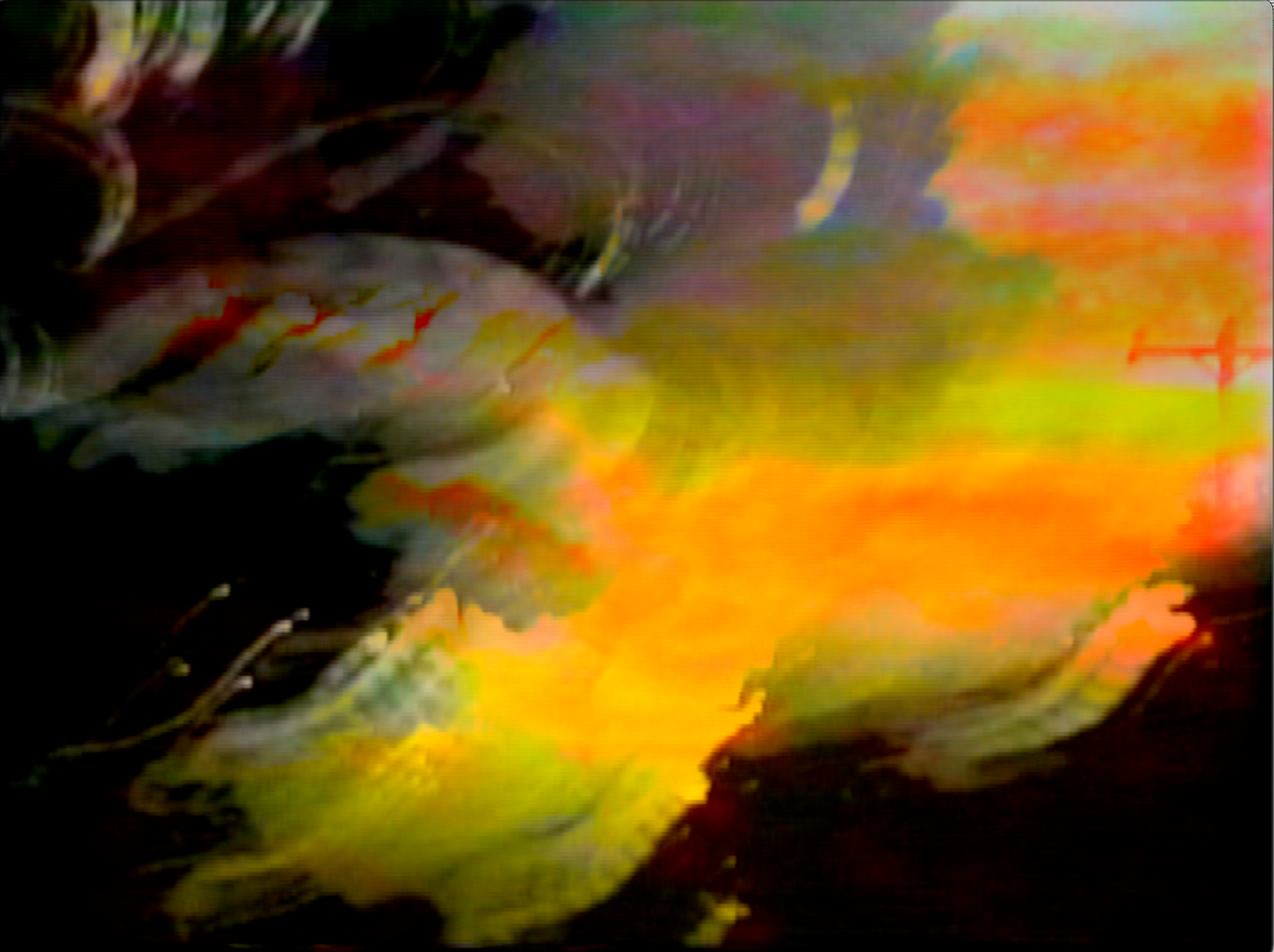
Antenna TV , opening sequence, Season I, Episode I, 1992.
Nearing the precipice, The Fool steps out lightly. Over their shoulder, a stick dangles with a few things tied to its end, wrapped in a simple handkerchief. Enough for the travel? Perhaps. But who knows what is enough? At The Fool’s heels is a little dog. Instinct.
The journey doesn’t begin without The Fool. The Zero, the ouroboros, connecting to its tail - the end is the beginning. This is precisely or imprecisely the manner in which many artists begin: the action. Movement is necessary, and The Fool is not gathering in the material sense, but is in it for the process, all but forgotten when commodification takes a strong hold. The Fool: an opti-mystic, even if at times, a depressed optimist.
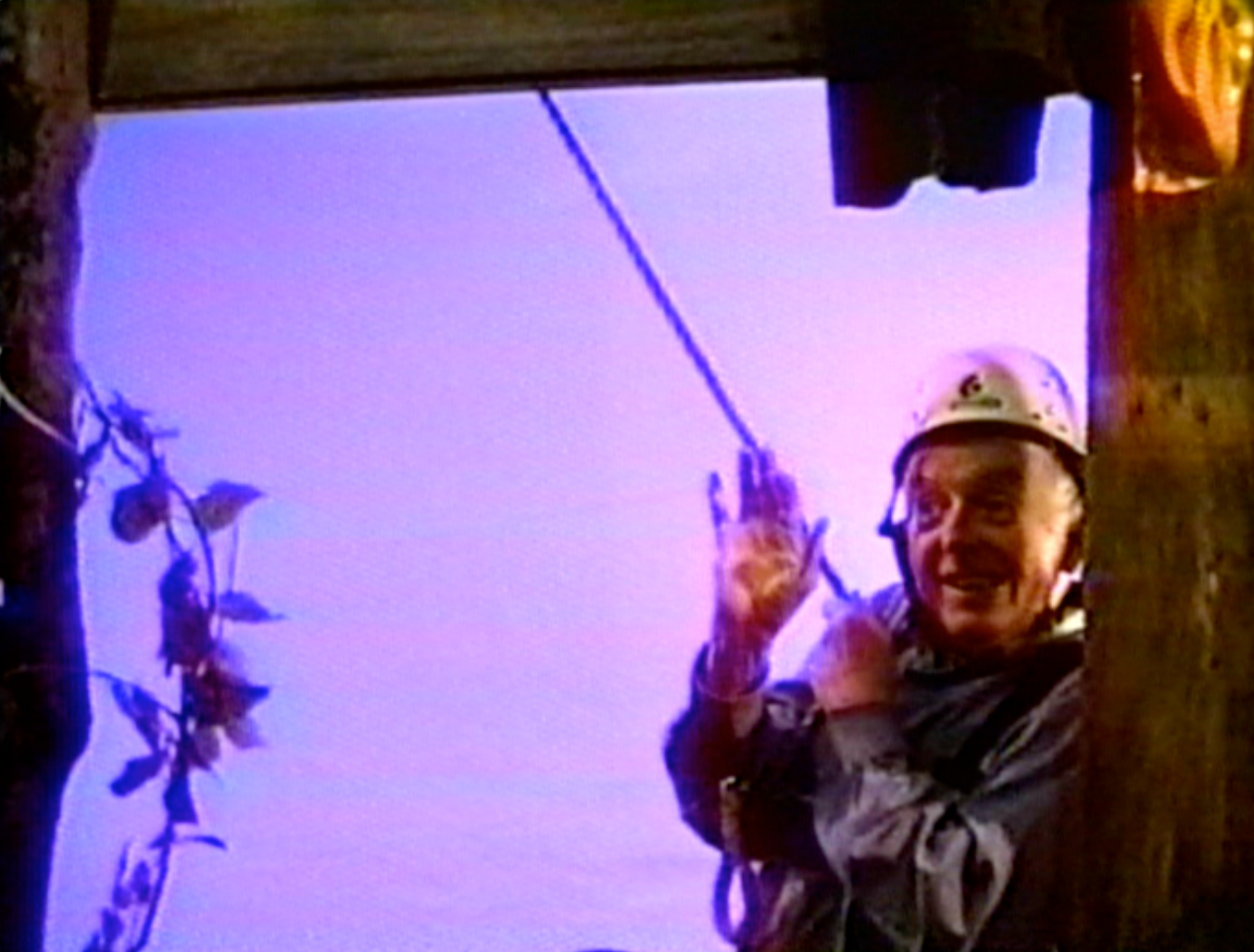
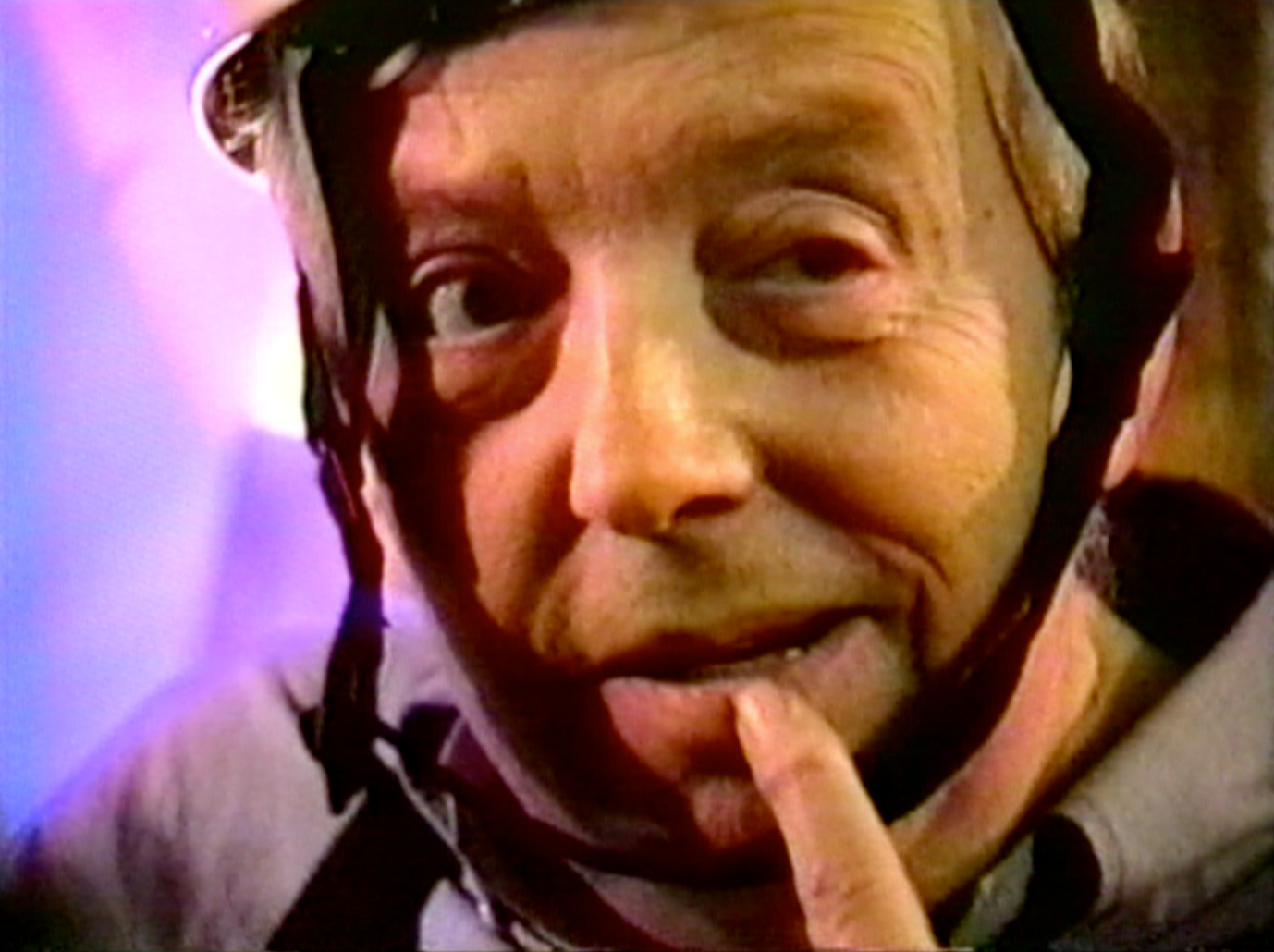
Taylor Mead as Dale Taylor in Curious White Boy written and directed by the late, Wright Thomas. Antenna TV. Season II, Episode 3. 1993 Filmed by Caterina Verde and Anney Bonney
Caterina Verde: Over decades (probably more), artists and artist communities have recorded and archived their times. The artist as archivist/historian takes on multiple critical meanings, providing other ideas about the nature of value.
Anney Bonney: And somewhere along the super highway the critics and curators took back seats, too, but they were in play then.
Looking in the rearview
CV + AEB: Early 90s New York was still a recovering city. We’d had 11 years of Mayor Ed How’m I doin’? Koch, then David Dinkins, our first black mayor, and finally Rudy (Ghouliani), a case study in political pathology. That was all before New York became the boutique mall it is today. Prada and Chanel had not yet established their presence on the streets of Williamsburg, and the medical radiation debris site, RADIAC, was still in full swing. Our friend Al Arthur used to call it the Toxic Riviera. AIDS ravaged and ravaged, galvanizing outrage, outreach, re-education, massive grieving, medical research, and power protests-activism…SILENCE=DEATH, ACT UP. Transition to -- at the same time and beyond – a vibrant community of artists + movements such as The Immersionists, Four Walls, Outpost Artist Resources, and others flourished in Williamsburg. Though soon enough, another neighborhood would fall to the capitalist demands of winner takes all. Many artists had to move out and/or move over. Just as they had moved from Manhattan (Manahatta) previously. Later years had institutions convincing artists to adopt absurd corporate language, like branding and try out your elevator pitch on the way to the club. Since when did artists take their cue from corporations?
AEB: Well, using those terms might have sounded subversive then. But the question is, do those buzzwords actually invert the power dynamics, or do they just prove ambition?
CV: Hopefully, we are moving past some of that mentality as mega galleries begin their shrinkage processional. Another parade.
AEB: Good image. A lot of “moving” in those thoughts. Do we join the parade or do we watch it?
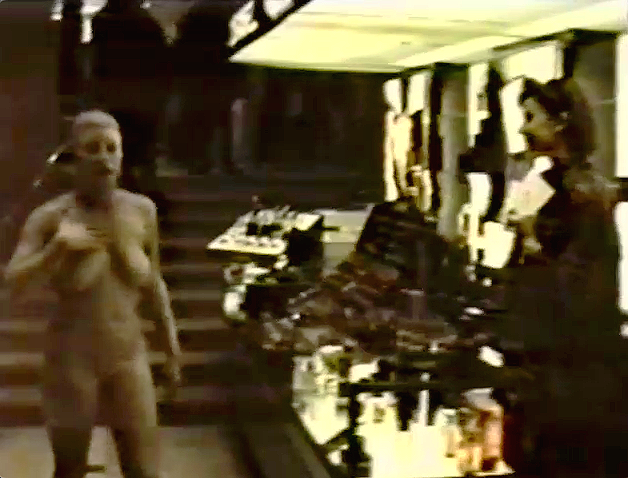
Ann Sofi-Siden, Queen of Mud, performance at Bloomingdale’s. Aired on Antenna TV as part of Four Walls, Season II, Episode II 1994.
CV: Yes, in 1992, we joined some kind of parade and tossed ourselves into the ring by launching a TV show, Antenna TV, on Manhattan Neighborhood Network. Though we had mutual friends, we didn’t really know each other. It was instinct that drew us together and led us to believe that it was a good idea to co-produce a cable TV show. Though Antenna TV was only broadcast for two years, it mapped a swath of that period that included collectives, poets, coders, mystics, filmmakers, visual artists, installation-based artists, musicians, and writers. The show scanned our past and lurched forward. The computers we used, the first with expandable drive slots and advanced visual software – the Commodore Amiga 2000– was a favorite among artist programmers because of its versatility and access. The Video Toaster made by NewTek was an add-on we used for video special effects. It was a real fetish object.
AEB: We loved that Toaster, and while we were always curious about technology, we were never guilty of overthinking our place in its history. We did think about video as a tool, video as an art medium, and video artists from Nam June Paik’s Global Groove (1973) to Steina Vasulka, Joan Jonas, Bill Viola, Gary Hill, and Frank Gillette. But they weren’t direct influences on the show’s structure or aesthetics. We didn’t shape our identity by comparing Antenna to earlier cable access shows like Liza Béar and Milly Iatrou’s Communications Update/Cast Iron TV, The Taylor Mead Show, Potato Wolf, All Color News, The Willoughby Sharp Show, Glenn O'Brien's TV Party (1978-1982), or even Andy Warhol’s T.V. (1980-1983).
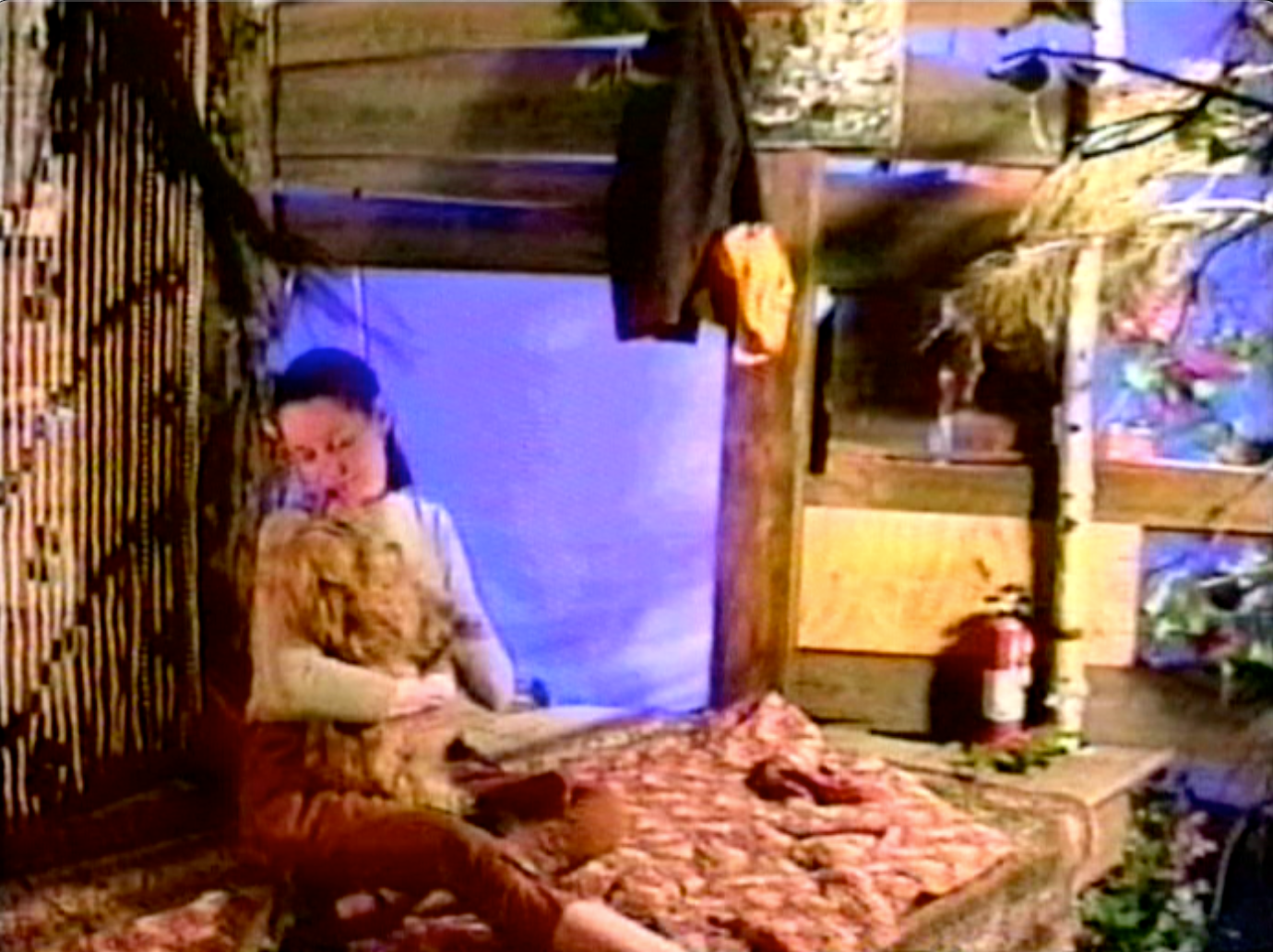
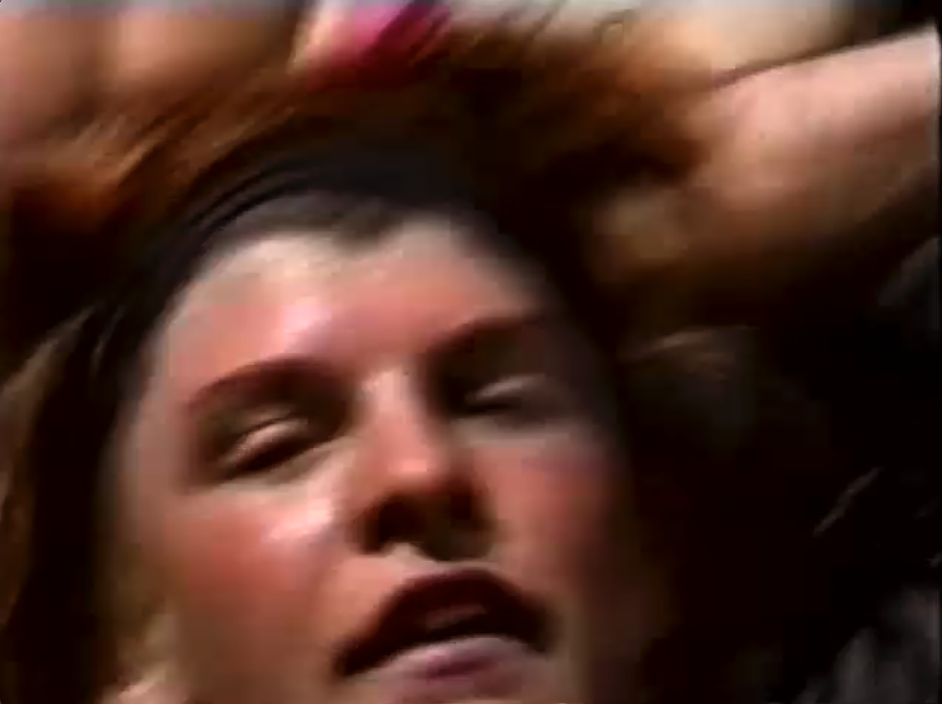
Jessica Stutchbury in Curious White Boy written and directed by the late, Wright Thomas. Antenna TV, Season II, Episode 3. 1993. Filmed by Caterina Verde and Anney Bonney.
AEB + CV: We were truly unencumbered by precedent. The only pioneer we were close to was Robin Byrd because her sex romp cult hit, The Robin Byrd Show (1977-1998), followed our MNN time slot (Sunday nights on aptly titled Channel 69). Did we share any of her viewers? We wonder. You can see what she was all about in the new HBO documentary, Bang My Box: the Robin Byrd Story. Amazing…
We played around with personal definitions for cultural context, riffing on signature subtitles – like anti-dogma tv; post-prandial tv, post-proustian tv, and so on.
As a fool can do, we found artists by happenstance. There was still a downtown scene, and Williamsburg had many artists at the forefront of technology. We highlighted artists who were not only dedicated to their own art making but also actively perpetuating and expanding their communities: Sylvie Degiez and Wayne Lopes; Ruth Kahn; Al Arthur; David Rattray; Shelley Marlow; Ann Sofi-Siden; Michael McClard; Tod Wizon; Jamie Nares; Fred Tomaselli and Wright Thomas, to name some of the many stellar artists we had on the show.
Artist, Michael McClard talking about his program DNA which he created with his brother, Peter McClard. The program created endless non duplicating faces. It was later shown at The Fondation Cartier in Paris. Antenna TV Season I, Episode 2
Antenna TV opening episode sequence still.
Invite for event at The Cooler on 14th Street
Video Toaster and DNA floppy disks for Michael and Peter McClard’s non-repeating faces program.
Marking up type for paste up.
David Rattray, reading Mr. Peacock, Antenna TV, Season I, Episode 1, 1992. Filmed by Anney Bonney and Caterina Verde
AEB: So far so good…And what was next?
CV: In 1994, Lauren Amazeen, then Executive Director of The Kitchen, hired me as the Performance Art Curator. To my surprise, but also my delight.
AEB: A highly significant situation that also signaled the end of Antenna’s run on MNN (during its third season). I remember not feeling ready to pack it up, so I tried relying on reruns and remixes. Ultimately, I had to admit I couldn’t do it alone. I understood the serendipity factor in The Kitchen as an artist-driven venue with a video-centric history.
CV: The Kitchen had a long tradition of artists as curators– not necessarily in their domain. Robert Longo was the Video Curator (Fall 77 to Spring 78), and Eric Bogosian was the first Dance Curator (1979-81). And while I was not a performance artist per se, I had a strong focus in that world. It was a secret interest of mine.
BUT, there was more to the background story. The Kitchen’s NEA funding had just been cut by almost a million dollars, thanks to Jesse Helms and the like. We were operating on a thread.
AEB: That’s a big opening issue, and you had a lot of other curatorial programming to do but primarily you were asked to start a new series.
CV: Yes, I created Hybrid Nights as my original contribution. Its essence was to move away from the proscenium concept of performer vs audience. The audience was an integral part of the performance; the space was used three-dimensionally, thinking volumetrically. We used the black box on the second floor. Many events were curated so performances and actions (as it were) happened simultaneously. Each evening had a theme and was curated according to that theme, but the artists didn’t have to be in on the theme or even set their direction accordingly. They were invited to come and do their thing. One theme was Men: From the Agrarian to the Industrial. I was thinking of reversing the male gaze amid various socio-anthropological considerations.
AEB: And that worked well, as I recall. You were also able to establish new audiences.
Photograph of Angus MacLise taken by Ira Cohen.
Hybrid No. 2 announcement for ORFEO, the story of the universe and manifestation of the first myth. Featuring Sylvie and Wayne with Ira Cohen, Baby Monroe, Taylor Mead, The Gift of Eagle Orchestra and other. Videos by Anney Bonney. The Kitchen, 1995
CV: Yes, we did. Hybrid Nights had the highest event attendance of that period.
AEB: So 1994 was an Alpha <>Omega year. Hybrid Nights came into the world, and Antenna TV went out.
CV: …but our collaboration continued via The Kitchen. And, as providence would have it, you took over the post at the end of 1997, when I left to accept (what would be) a two-year residency at The Cité Internationale des Arts in Paris.
AEB: That’s right. And becoming the last Hybrid Nights Curator was a bittersweet trip, my favorite job ever. I oversaw the gallery and archives, too, but carrying on Hybrid Nights was the heart of being there.
And why was our popular series ended so abruptly? Feel free to speculate.
Hybrid No. 9. Chutes and Ladders - The Dilemma of Levels, The Kitchen, 1995. Alexandre Perigot, Jackson MacLow and Anne Tardos, Jim Agard, Jens Brand.
CV: We worked with so many great artists from the early downtown days (Jackson MacLow and Anne Tardos) to artists just coming up making new edgy performances. Daria Fain and David Hykes were part of Hybrid No.2
AEB: Jackson and Anne were in your first show, shout out to Fluxus.
CV: The energetic diversity of intention and attention was happening in real time.
AEB: And it was pretty stunning. I remember Billy Basinski in a full-scale rabbit suit, Antony’s haunting vocals, and Kathy Rose performing as a goddess within her 16 MM projected animations. Three incredible artists invoking hypnotic altered states. And there could have been more, but it wasn’t to be.
In May, 1999 honoring its Hybrid nature, the last show, Trance Encounters, blended the talents of The Kitchen staff artists as well as past Hybrid artists and their friends. It was a collectively unconscious concept album, performed live thanks to Tom Burnett’s MC chime improvisations and stage direction. I wish you’d been there.
Hybrid No. 18 Kapusta Descending. George Kuchar as Pluto, King of the Netherworld. Marc Kehoe aka Walter Kapusta. The Kitchen, 1998.
Fast forward
Two + decades
AEB + CV: Over the last few years, we’ve reunited to examine and better coordinate our archives. We learned that in 2014 The Getty Research Institute had acquired The Kitchen’s archives (1971 - 2000). And that included our programming, but good as that is, the material doesn’t (well, can’t) really tell our story.
What started as a joint rummage through our old boxes of tapes and programs has evolved into an updated project. We want to reveal and reflect on our work together with the insights only distance can bring. It’s been a very particular set of circumstances that keeps cycling and recycling through our lives. The how, why, and where of what we initiated has its own poignancy, a devotional sense of the absurd.
The result is a (forthcoming) book, ANTENNA/HYBRID, part of Peat + Repeat’s Bog Series to detail the times, the contracts, the community, the failures, and the general optimism we’ve shared while The Foolish one still rules as our collaborative archetype.
Hybrid No.4 Folk Tales and Monsters with David Rattray, Ann Sofi-Siden, Gene Pool, Linda Hill, Billy Basinski, Darin Wacs, Stephanie Urdang, James Elaine, Leslie Lovechild, Alex Kahn, and Antony. The Kitchen, 1995. Painting by Anney Bonney
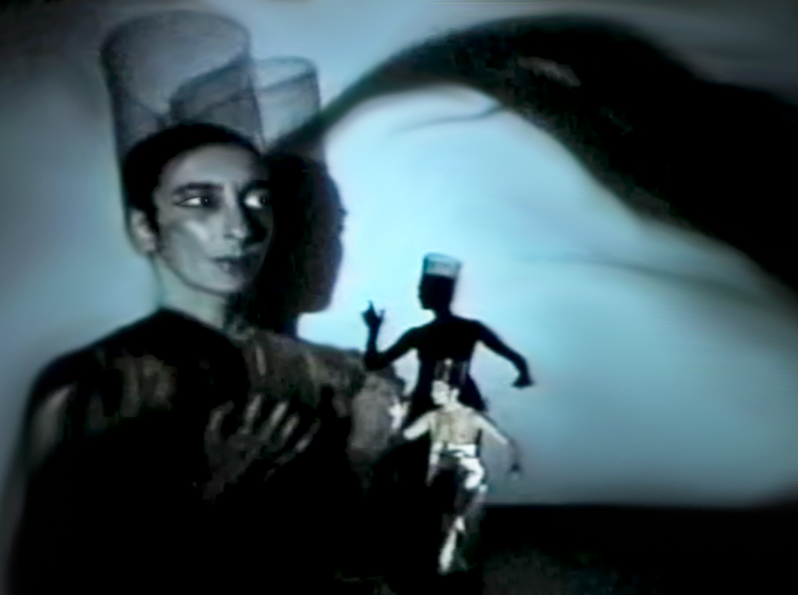
Hybrid No. 14, Kathy Rose performance, The Kitchen, 1997
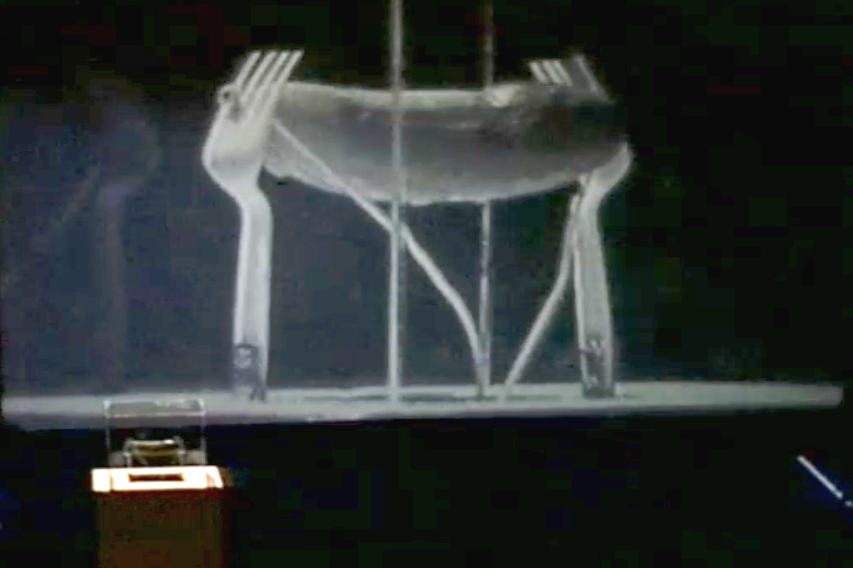
Hybrid No. 17, Sue Poulin, Exploding Pickle, The Kitchen, 1998